AI for materials science
Machine learning and knowledge-driven frameworks for materials discovery, laboratory intelligence, and interpretation of complex scientific data.
German version available. Switch to German?
Research contributions
My research lies at the intersection of artificial intelligence, data science, graph learning, optimization, and materials informatics. Recent work develops original computational methods and AI-driven frameworks that connect methodological novelty with scientific and engineering applications.
Machine learning and knowledge-driven frameworks for materials discovery, laboratory intelligence, and interpretation of complex scientific data.
Graph neural models, representative sampling, network sparsification, and relationship-aware prediction in structured scientific domains.
Original metaheuristic algorithms inspired by natural and social systems for engineering design, materials search, and complex optimization.
Domain-aware use of large language models for electronic laboratory notebooks, knowledge extraction, documentation, and research automation.
Ongoing research
These current research works show three active directions I am developing: trustworthy AI for biology, editorial integrity systems, and generative methods for incomplete networks.

Ongoing research, 2026
Interpretable bioinformatics
How can AI help biologists inspect overlapping protein modules instead of returning opaque clusters?
ECHO-PPI introduces an evidence-bundled framework for protein-protein interaction networks. It combines topology, semantic protein profiles, and Gene Ontology evidence so each protein-module assignment can be inspected as core, peripheral, or uncertain.
Follow this work if you are interested in trustworthy AI for biological discovery, curator-facing graph analytics, and interpretable decisions in noisy molecular networks.
Ongoing research, 2026
Editorial AI and research integrity
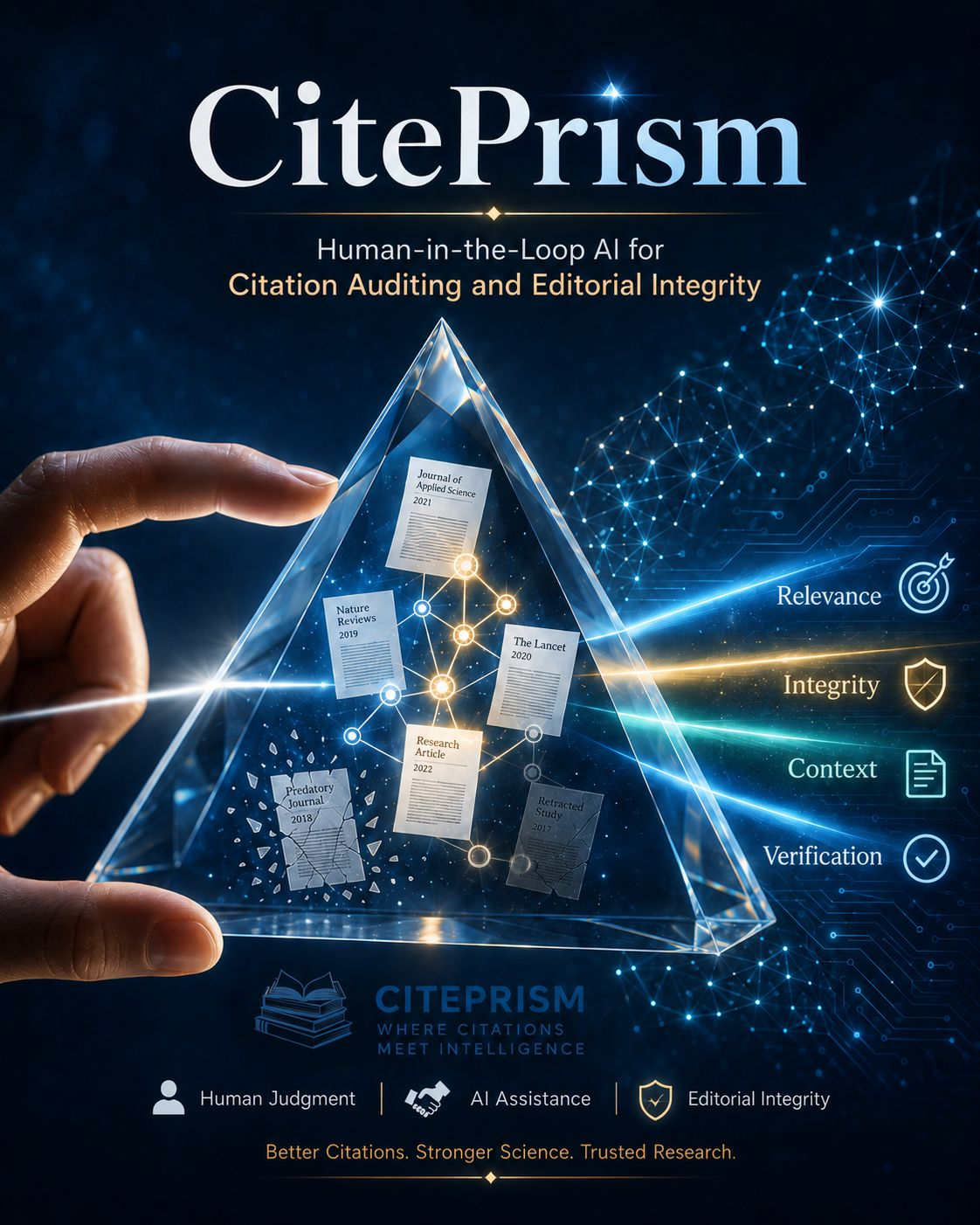
Can AI support editors in checking whether citations actually substantiate the claims they are attached to?
CitePrism is a feasibility-stage hybrid decision-support prototype for editorial citation auditing. It combines LLM-assisted context reasoning, semantic similarity, metadata verification, integrity-oriented flags, and mandatory human oversight.
Follow this work if you care about publication ethics, scalable editorial workflows, and AI systems that assist expert judgment without replacing it.
Ongoing research, 2026
Generative graph science
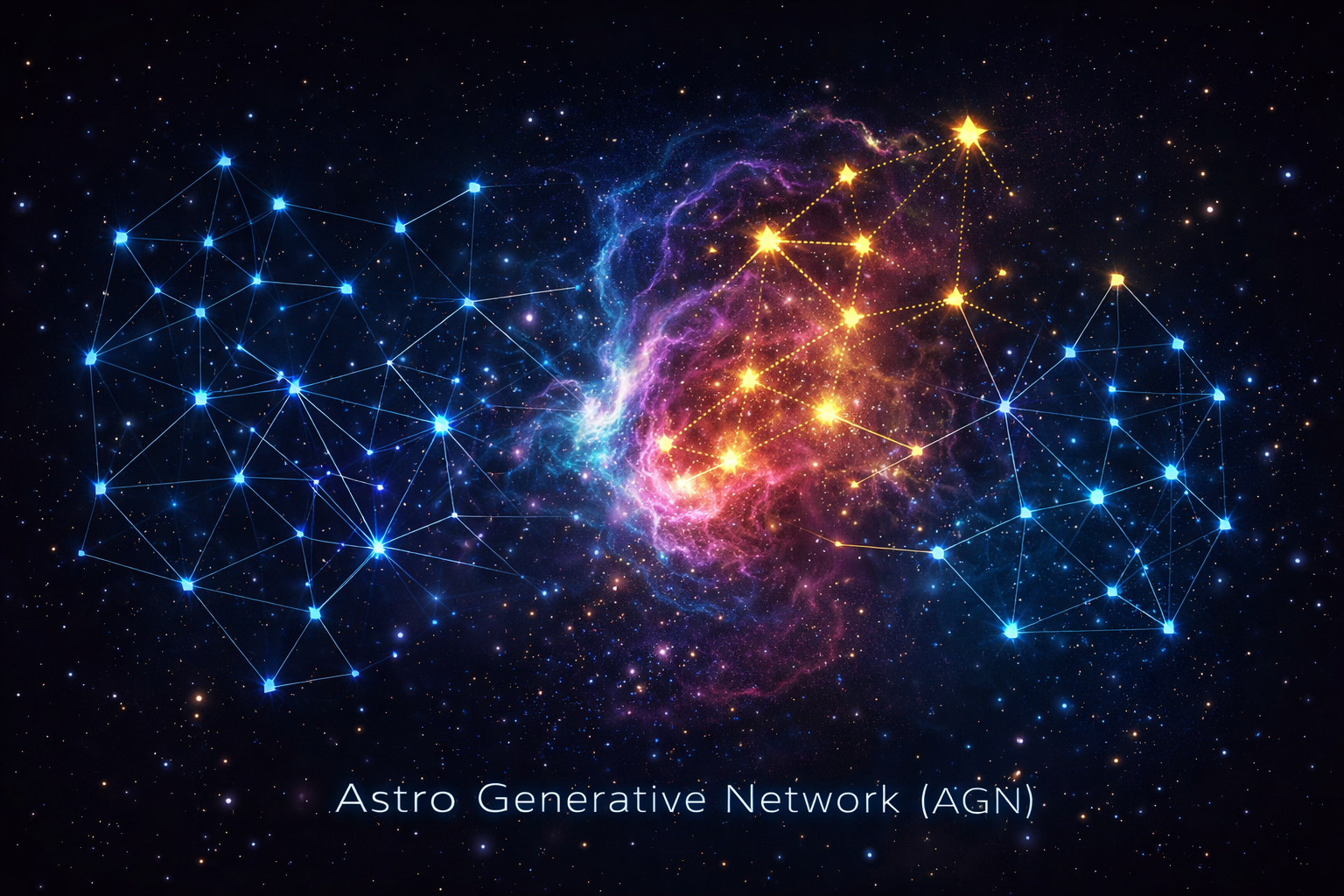
What happens to a network when plausible missing actors are inserted into the observed graph?
AGN proposes a variational graph framework for controlled node insertion in incomplete networks. Rather than generating a new graph from scratch, it extends an observed backbone with plausible new nodes while preserving interpretable topology.
Follow this work if you are interested in incomplete networks, graph robustness, topology-aware augmentation, and generative AI for network science.
Project showcase

Frugal graph learning
A gravity-inspired representative sampling framework for metal-organic framework networks. It identifies structurally informative nodes so graph learning systems can operate with reduced labels while preserving relational patterns.
Read publication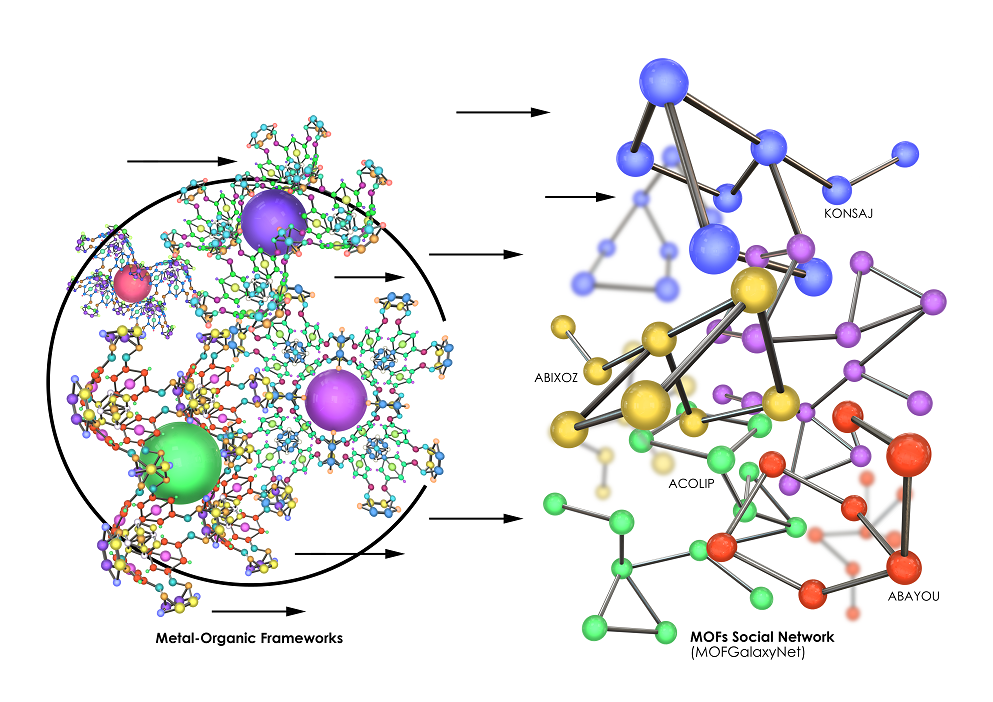
Graph convolutional networks
A graph convolutional framework for predicting guest accessibility in metal-organic frameworks through a relationship-aware view of materials.
Read publication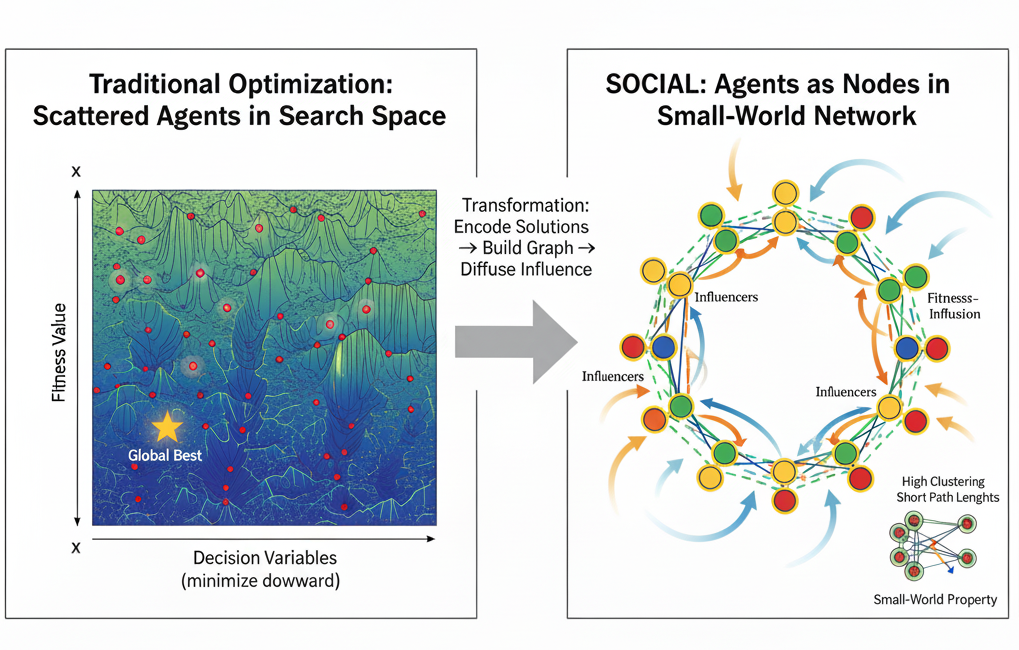
Social network optimization
A centrality and influence-aware optimization algorithm that brings social network dynamics into metaheuristic search.
Read publication
Nature-inspired optimization
A lotus-inspired search framework for engineering design and complex optimization tasks, later extended into application-oriented variants.
Read publication
AI for nanocarrier discovery
A lotus-effect-inspired optimization framework for accelerating discovery of metal-organic framework nanocarriers for doxorubicin delivery in cancer therapy.
Read publication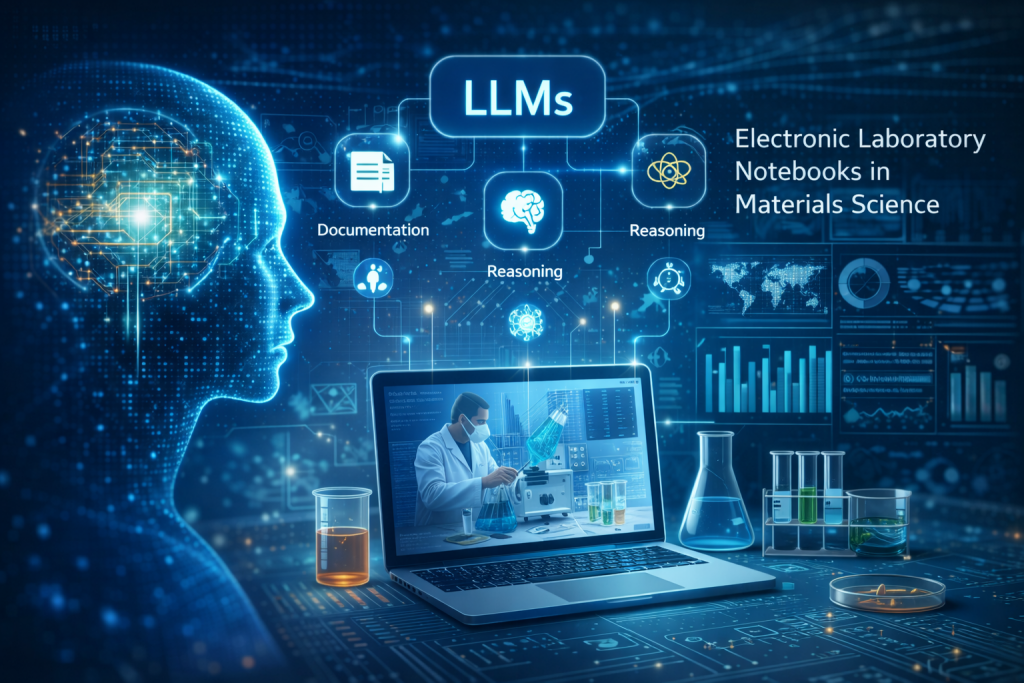
Scientific language models
Research on how large language models can support electronic laboratory notebooks, documentation, knowledge extraction, and scientific reasoning in materials science.
Read publicationResearch projects and funding
Selected projects from the CV, translated and summarized in English for the academic website.
2022-2025
Development team
DFG / KIT
Development of FAIR data infrastructures for materials science and related research fields.
View FAIRmat team
2020-2023
Principal project member
BMBF / KIT
Semantic representation, networking, and quality-assured curation of materials data.
View STREAM project
2021-2025
Joint Lab member
Helmholtz Association
Participation in the Joint Lab Model and Data-Driven Materials Characterization.
View MDMC ontology
2009-2010
Project lead
Malaysian Institute of Microelectronic Systems
Project leadership for automated ontology generation and applied knowledge engineering.